Article: Clothes for Different Occasions and What Pakistani Women Wear to Each
Clothes for Different Occasions and What Pakistani Women Wear to Each
When choosing clothes for different occasions, the first thing to consider is how formal the event will be. A relaxed family gathering calls for something different from a wedding reception or an evening dinner. Once you understand the occasion, choosing the right outfit, color and fabric becomes much easier.
Weddings take more thought. A shaadi here is a set of events, not one. The dholki is at home and relaxed, while the barat is in a hall and very formal. We start with each wedding function, then cover office wear, dinners, convocations and a milad.
Brides have their own set of choices, and what the bride wears for each function is covered in another post. This page is for guests, family members and ordinary days out.
A Quick Guide to Clothes for Different Occasions
Need a quick answer? Check the table. The sections below it give the details for each event.
| Occasion | How formal | Colors that work | Outfit ideas |
|---|---|---|---|
| Dholki | Relaxed | Bright, cheerful shades | Printed or lightly embroidered kurta, simple shalwar kameez |
| Mayun | Relaxed to festive | Yellow, mustard, green | Kurta with sharara, simple gharara |
| Mehndi | Festive | Mustard, green, pink, orange | Sharara, gharara, lehenga, peshwas |
| Nikkah | Semi formal and modest | Pastels, ivory, nude tones | Long kameez or anarkali with a full dupatta |
| Barat | Most formal | Jewel tones, metallics, soft shades with rich work | Embellished lehenga, kalidar, formal anarkali |
| Walima | Formal but calm | Pastels, silver, dull gold, grey, black at night | Long shirt with slim trousers, maxi, saree |
| Office | Smart and simple | Neutrals, earthy shades | Straight kurta with cigarette pants |
| Convocation | Smart | Light or neutral shades | Fitted kurta with straight trousers |
| Dinner or Eid dawat | Semi formal | Any, deeper shades at night | Luxury pret, embroidered shirt with trousers |
| Milad or Quran khwani | Simple and modest | White, off white, muted pastels | Plain shalwar kameez, dupatta over the head |
Pakistani Wedding Guest Dresses for Each Function
A Pakistani wedding usually runs for three or four days. Outfits get heavier as the days go on. A guest who wears a barat outfit to the dholki looks overdressed, and the opposite looks careless. This is one of the most common mistakes wedding guests make.
Dawn Images says the same in its function by function wedding guide. Your mehndi outfit may not be suitable for a formal walima reception. Below is what each event usually asks for.
Dholki and Mayun
The dholki is a night of singing at home, mostly with close family. Guests often sit on the floor, sometimes for hours. Wear something soft and easy. A printed lawn kurta with trousers works. So does a shalwar kameez with light embroidery.
The mayun is the ubtan ceremony. Its color is yellow. Guests don't always have to follow it, but many families set a yellow and green theme. Mustard, orange and parrot green suit it. Not sure? Ask the host before you buy anything.

Moss Mustard is one example. It's sheesha silk with resham work and an organza dupatta. Wear it plain to the mayun, then add heavier jewelry for the mehndi.
Mehndi
Expect music, dancing and henna. Bold colors fit this night best. Think mustard, green, hot pink, orange or royal blue. Mirror work and gota look good here too.
You will be moving a lot, so pick a cut that lets you move freely. A sharara and gharara both give your legs room. A lehenga choli or a flared peshwas also works. Getting henna yourself? Avoid very light fabric. Wet mehndi leaves marks that don't wash out easily.
Nikkah
The nikkah is often small. It may be at home, in a mosque or on the same day as the barat. Dawn Images notes that nikkahs are usually close family affairs. Heavy joras aren't expected, and pastels, ivory and nude tones are common.
Dress modestly. Choose sleeves that reach at least the elbow and a longer shirt. Bring a dupatta wide enough to cover your head during the ceremony, more so in a mosque. A long kameez or an anarkali with straight pants is a safe pick. The bride's nikkah dress is lighter than her barat look as well, so guests keep it soft too.

Barat
The barat is the biggest night of the wedding. Guests wear their best here. Embellished lehengas, kalidars, formal anarkalis and heavy dupattas are all normal. Emerald, sapphire, plum and gold are popular colors.
Red is traditionally associated with the bride at a barat, so guests often choose other colors unless the family has a different dress code. A heavy red lehenga with gold zardozi is the look to avoid. Wine or rust is fine if it doesn't look like the bride's outfit.
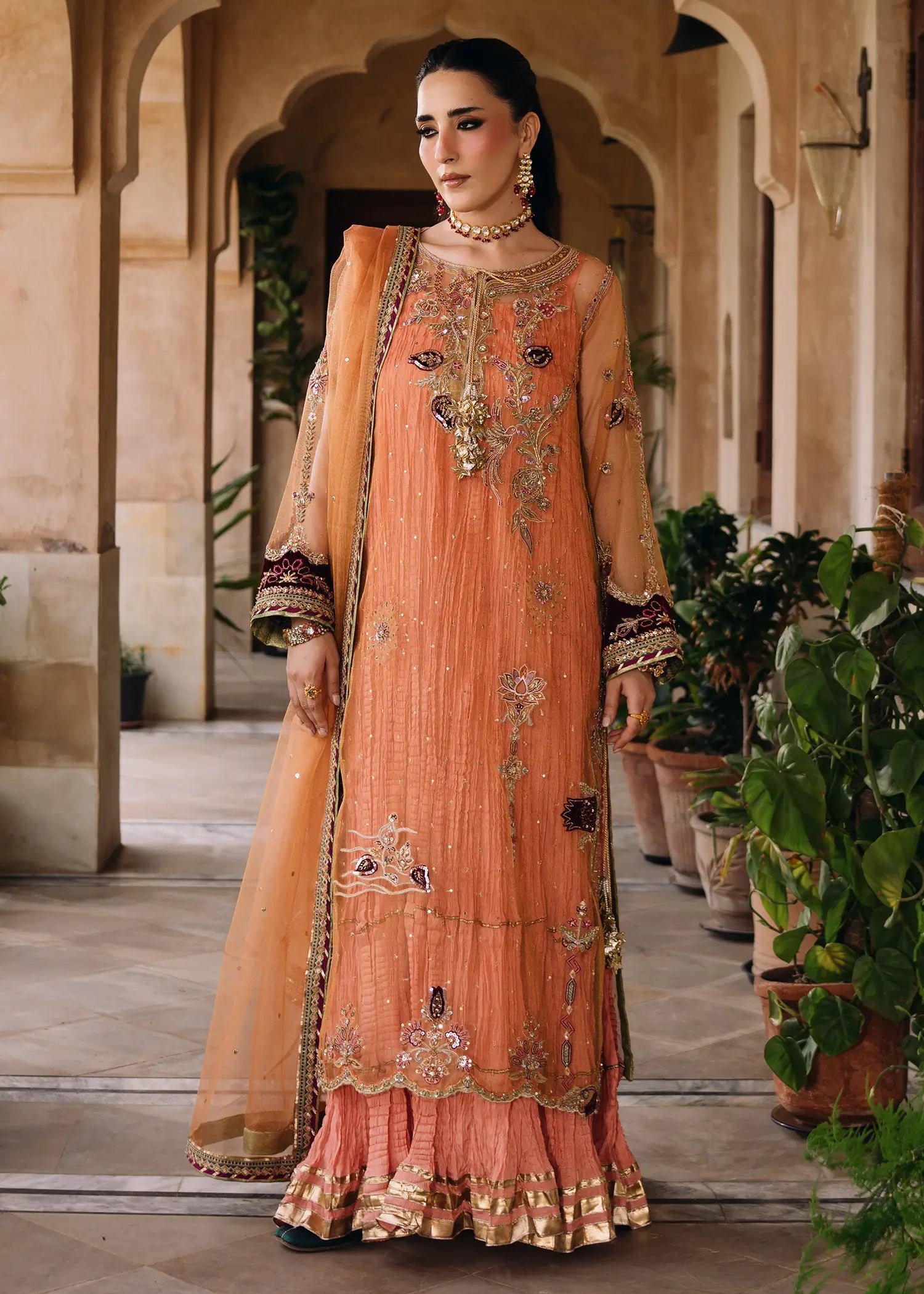
You don't need a dark color, though. Persian Night is a soft peach khaddi net shirt with zardozi over a crushed silk kalidar. It looks formal enough for a barat hall.
Walima
The walima is hosted by the groom's family, usually after the barat. It's formal but quieter. Dawn Images names grey, dull gold and silver as common walima colors. Champagne, lilac and ice blue also work.
Wear a long shirt with slim trousers, a maxi or a saree. Black has become a common choice for evening walimas. Aura Black is a good example, with an ankle length shirt and crystal work that keeps it dressy.

Colors to Wear and Avoid as a Wedding Guest
Guests ask about color more than anything else. Traditional wedding color preferences have become more flexible, although some families still follow familiar customs.
Red, White and Black
Red is the usual bridal color for the barat, so guests tend to skip it that night. Even this is changing. Dawn Images reported that red isn't strictly kept for the bride anymore, with family members wearing full red at a sister's wedding. We'd still avoid red at the barat unless the family says it's fine. A red kurta or dupatta at other events is no issue.
White depends on the event. Ivory and nude tones are fine for a nikkah, and plain white is normal at a milad. At a mehndi, all white looks flat among bright colors. Add a colored dupatta or gold jewelry.
Black depends on the family. Some elders don't like it at weddings. Younger guests wear it often, mostly at night events like the walima. In a conservative family, navy or bottle green is a safer dark choice.
Day Events vs Evening Events
Sunlight shows every bit of shine. For a lunch nikkah or a daytime mayun, go lighter and pick thread or resham work. In an evening hall, warm lights suit deep colors, crystals and sequins. Use this when you can't decide between two outfits.
Dressing as Family, a Friend or a First Time Guest
Your role at the wedding changes what you should wear. The bride's sister and an office colleague have different jobs that day.
Sister of the Bride or Groom
Sisters appear in most photos. They greet guests and take part in rasms like doodh pilai and joota chupai. Dress a step above the guests and a step below the bride. Many sisters plan matching colors with cousins for each event.
Check the bride's color for each function so you don't match her by mistake. These engagement looks for the bride's sister show how much work suits a lighter event.
Mother of the Bride and Family Elders
Mothers and aunts host for hours. They stand at the door, check the food and meet every family. Comfort comes first for them. A straight long shirt, a peshwas or a raw silk suit with a light dupatta works well. Add a shawl in winter. Rich colors with fine work look graceful without being heavy.
Friends and Non Pakistani Guests
Friends can go festive but shouldn't look bridal. One good formal suit can cover two events if you style it differently. More on that below.
Not Pakistani but invited? Most hosts are happy to see you in a ready made shalwar kameez or an anarkali. A long Western dress with sleeves is fine too. Leave short and strapless styles for another event.
Fabrics, Seasons and Modesty
Summer vs Winter Weddings
In summer, choose chiffon, organza, net or luxury lawn for day events. Make sure sheer fabric is lined.
In winter, velvet, raw silk and jamawar make more sense. Carry a pashmina or embroidered shawl. Outdoor lawn events get cold at night, even if the hall is heated. For more cold weather ideas, see these winter dresses that keep you warm without bulk.
Modest Choices That Still Feel Festive
A modest outfit can still look festive. Long sleeves with cutwork, a high neckline with embroidery or a longer shirt all help. If you wear a hijab, get one in the same fabric as your dupatta.
How Many Outfits You Need and How to Rewear Them
Invited to the dholki, mehndi, barat and walima? That doesn't mean four new outfits. Most guests can manage with two or three outfits by restyling them for different functions.
Here is one way. Wear a formal suit to the walima with a contrast dupatta and small studs. Wear the same suit to a dinner later with big jhumkas, heels and a new dupatta. This also works on the same day. Keep jewelry light for a daytime event, then add more for the evening.
Then decide on stitching. Tailors are fully booked before wedding season, so ready to wear saves time. JEEM's formal dresses come stitched in standard sizes. Delivery within Pakistan is free, and the estimated time is shown on each product page. For cuts, fabrics and fit, read more about formal dressing.
Shoes, Dupatta and Jewelry for Wedding Functions
You will stand, dance and wait in buffet lines. Embroidered khussas are the comfortable option. Many women wear heels for photos and change into flats later, so keep a pair in the car.
Pin a heavy or slippery dupatta at the shoulder, mainly at the mehndi. Let the neckline guide your jewelry. A busy neckline goes better with jhumkas or chandbalis than a choker. A plain neckline can take a bold necklace. A small potli bag holds your phone and lipstick. Glass bangles or a gajra suit the mayun and mehndi.
Clothes for Other Occasions
Most days aren't weddings. Here is what to wear for the rest.
Office, University and Convocation
For the office, wear a straight kurta with cigarette pants or straight trousers. Lawn and cotton work well in summer, while khaddar or linen blends are better for colder months. Neutral and earthy colors look neat and mix well.
At a convocation, the gown hides most of your outfit. Wear a fitted kurta with straight trousers, not a wide shalwar. Skip a bulky dupatta. Pick a neckline or collar that shows above the gown, and wear shoes you can walk across the stage in.
Dinner Parties, Eid Dawat and Casual Outings
A dinner at someone's home or an Eid dawat is semi formal. Luxury pret or an embroidered shirt with trousers is enough. Go for deeper colors at night. Eid looks are a bit brighter, and festive wear covers them in detail.

Nahl Beige has tassel details and an organza dupatta. It suits a family dinner and also a small wedding event. For casual outings, a lawn kurta with jeans or trousers and kolhapuris is enough.
Milad, Quran Khwani and Religious Gatherings
These are calm, religious gatherings. Wear white, off white or soft pastels. A simple shalwar kameez with little or no jewelry is right. Carry a dupatta to cover your head when required by the gathering or venue, and skip heavy embroidery and shine.
Summary
The best clothes for different occasions start with the event itself. Match its formality first, then think about comfort, because you may be sitting on the floor at a dholki or standing for hours at a barat. Respect family traditions too, from color themes to bridal red, and ask when you're unsure. Finally, buy pieces you can restyle, so one good formal suit works across several functions and later dinners.
Frequently Asked Questions
What do guests usually wear to a Pakistani wedding?
Women mostly wear embroidered eastern outfits. Shalwar kameez, anarkalis, shararas, ghararas and lehengas are all common, chosen by function. Lighter and brighter looks suit the dholki and mehndi. The barat and walima need formal pieces with more work. Men usually wear a kurta with a waistcoat, a sherwani or a suit.
Can I wear Western clothes to a Pakistani wedding?
Yes, at some events. A modest floor length gown or a long dress with sleeves is common at walima receptions, mainly in big cities and abroad. For the mehndi and nikkah, eastern clothes are safer. If you can't decide, a long kameez with straight trousers fits in at almost any function.
How do I find out the dress code for a wedding function?
Check the invitation card first. Many families also share color themes in a WhatsApp group. If nothing is mentioned, ask the bride, the groom or a close relative. Most people are glad you asked. It also stops you from matching the bridal party or showing up too casual.
Is a ready to wear outfit fine for a wedding?
Yes. Many formal ready to wear outfits use the same embroidery and fabrics as custom pieces. Nobody will know the difference. Check the size chart carefully and leave time for small changes to sleeve or trouser length. Order a week or two before the event so you can try it on with your shoes and jewelry.
What is the difference between semi formal, party wear and festive?
Semi formal is neat, with light work, and right for a dinner or a nikkah. Party wear has more shine and suits evening events. Festive outfits fall in between, with bright colors and lighter work for Eid or a mehndi. This guide on choosing formal wear for an event explains each level.