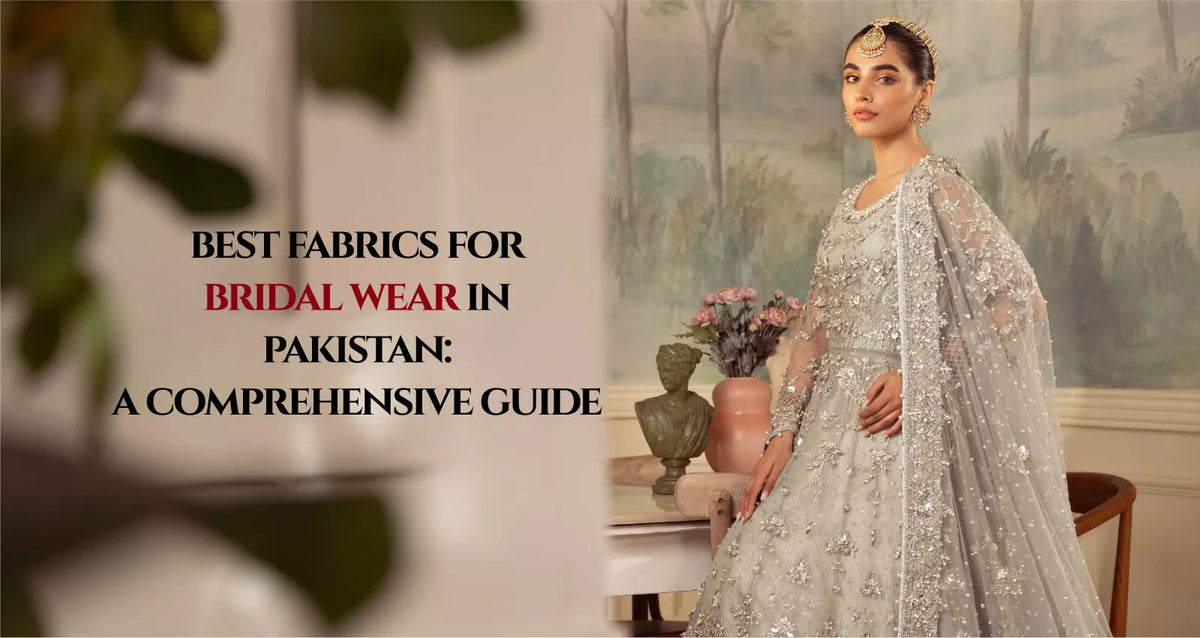
Best Fabrics for Bridal Wear in Pakistan
Choosing the right bridal dress fabric in Pakistan depends on the wedding season, the function and how much embroidery you plan to wear. For a winter barat, velvet, raw silk and jamawar are the usual choices. For a summer wedding or a walima in a busy hall, organza, net and chiffon are easier to wear. Heavy embroidery is nearly always done on net or tulle, even when the outer layer is a different fabric.
A bridal outfit rarely uses only one fabric. The shirt, lehenga and dupatta are often made from different materials, so it helps to know how each one behaves before you order.
Why the Right Fabric Matters for Bridal Wear
Bridal outfits with full embroidery are heavy, and brides wear them for many hours, from the photo shoot to the rukhsati. The fabric affects how heavy the outfit feels, whether the lehenga keeps its shape until the end of the event and how the color shows under stage lights. A red velvet lehenga and a red organza lehenga will not look the same in photos.
Common Fabrics for Wedding Dresses in Pakistan
Below are the main fabrics used in Pakistani bridal wear, starting with the heavier ones.
Velvet
Velvet is a popular choice for winter barat dresses because its thick texture adds warmth and gives deep colors a rich appearance. It absorbs light, so maroon and deep red appear even and solid in photos without shiny spots. Velvet is heavy, though, and zardozi or dabka adds a lot more weight. We suggest using it for the lehenga, a fitted shirt or a shawl and choosing a lighter fabric for the dupatta. Embroidered velvet dresses show how much work the fabric can carry, and among winter fabrics in Pakistan it is warmer than khaddar and karandi.
Silk and Raw Silk
Raw silk is common in Pakistani formal and bridal wear, and most silk dresses here are cut from it. Its surface is slightly textured with a matte glow, and it is stiff enough to hold a structured shirt or a lehenga flare. It carries heavy hand work well too.
Pure silk and blended raw silk can have different textures and wearing qualities, so check the fabric composition before ordering. Katan is another name you'll hear in bridal shops. It's a closely woven pure silk that's often used for lehengas.
Jamawar
Jamawar is woven with its pattern, mostly paisley or floral designs, so it looks decorative without added embroidery. That helps on a lehenga. You get a rich surface without piling more work onto the heaviest part of the outfit. Our current bridal outfits mostly use a jamawar lehenga with an embroidered net shirt.
Brocade
Brocade also has a woven pattern, often with metallic threads, but it is stiffer than jamawar. A full brocade outfit gets uncomfortable over a long event, so it works better as a border, jacket or choli.
Organza
Organza is sheer and stiff, so it holds volume instead of falling against the body. It adds fullness to sleeves, lehengas and dupattas without much weight. The catch is shine. Strong flash can reflect off organza, so it photographs better at a daytime nikkah or a walima with softer lighting.
Net
Net is the most common base for heavy bridal embroidery. It is light and open, so designers stitch dense zardozi, sequins and stones onto it and then add a lining. Heavy bridal dupattas are mostly net for the same reason. A velvet dupatta with the same amount of work would be hard to keep on your head for an hour, let alone a whole evening.
Tulle
Tulle is a finer and softer type of net. It is mostly used inside lehengas, layered over a can can for volume, or as a light overlay. It can catch on jewelry and heels, so take care with it during photos.
Chiffon
Chiffon is one of the lightest bridal fabrics and the most comfortable in hot weather. It flows well and looks soft in natural light, so it suits a summer nikkah or a small mehndi. It doesn't cope with heavy metal embroidery on its own, though. The thread pulls the fabric and it puckers, so a well made chiffon bridal piece is either lined or has its heavy work done on a net panel.
Georgette
Georgette is a little heavier than chiffon and has a grainy texture. It does not crease easily, drapes close to the body and holds medium embroidery better than chiffon. It works well for a mehndi sharara or gharara.
Tissue
Tissue is woven with metallic yarn, so it shines even without embroidery. In bridal wear it mostly appears as a dupatta or a trim. Use it as an accent. A full tissue outfit catches every flash in the room.
Best Fabric for a Bridal Lehenga
For most brides we'd pick raw silk or jamawar. Both fabrics provide enough structure for a wide lehenga flare and take heavy work well, while remaining suitable for long wedding functions. If the wedding is in December or January and the venue is cold, velvet is worth the extra weight, as long as the embroidery is placed with some restraint instead of covering every panel.
If your bridal lehenga fabric is net or organza, it can look fuller than any of these, but that fullness comes from what's underneath them, usually layers of tulle, a can can and a lining that stops the layers showing through. If you want a wide, gown like spread, ask how many kalis the lehenga has and what sits under it before you sign off on the design.
Our Pink Bridal is a good example. The lehenga is jamawar with an embroidered border. The shirt and dupatta are net, worked with zardozi, pearls and crystals.

How to Choose Bridal Dress Fabric by Season and Event
Each wedding function needs a different kind of fabric, just as it calls for a different bridal outfit.
Most brides wear red or maroon with heavy embroidery for the barat. For a winter bridal look, that usually means velvet, raw silk or jamawar. For a summer barat, a raw silk or jamawar lehenga with a net shirt gives a similar look without velvet.
The walima is lighter. Common choices are pastel, silver or light gold outfits in organza, net or tulle, which are cooler in a full hall. The nikkah is often held in the daytime, sometimes at home, so chiffon, organza or light silk suits a nikkah dress better than a heavy fabric. At the mehndi you will move around a lot, so georgette, chiffon or lighter raw silk with gota or resham work is practical.
Then there's the weather. A velvet lehenga at a May wedding in Karachi is a mistake you'll feel within the hour, and chiffon at an open air winter function in Islamabad isn't much better. Weddings abroad add another twist. Halls in the UK, Canada and the Gulf are heated or air conditioned, so raw silk is often more comfortable than full velvet even in a British winter.
| Fabric | Best season | Best for | Heavy embroidery | Weight | On camera |
|---|---|---|---|---|---|
| Velvet | Winter | Barat lehenga or shirt | Yes | Heavy | Deep color, no glare |
| Raw silk | All year | Barat, walima | Yes | Medium | Soft glow |
| Jamawar | Winter and spring | Lehenga | Light work, pattern is woven in | Medium to heavy | Patterned surface |
| Brocade | Winter | Borders and jackets | Light work | Heavy | Metallic |
| Organza | Spring and summer | Walima, nikkah, dupatta | Medium work, needs backing for heavy work | Light | Can glare under flash |
| Net | All year | Shirts, sleeves, dupattas | Yes, once lined | Light | Depends on the work |
| Tulle | All year | Lehenga layers | Light work | Very light | Soft volume |
| Chiffon | Summer | Nikkah, mehndi | Light work, needs lining | Very light | Soft in daylight |
| Georgette | Spring and summer | Mehndi, walima | Medium work | Light | Matte |
| Tissue | All year | Dupattas and trims | Light work | Light | Shimmer, can glare |
Which Fabrics Hold Heavy Embroidery
Zardozi, dabka, tilla and kora are all metal based. Dabka and kora are coiled metal wire, tilla is metallic thread, and zardozi combines them with beads and sequins. This work is heavy, so the fabric under it needs enough strength to carry it.
Velvet, raw silk and jamawar can take dense work directly. Net can too, but only once it's lined, which is how most heavy bridal shirts are made. Chiffon and georgette are fine with resham and light sequins, so ask for a backing fabric if the design puts dabka on either of them.
Combining Fabrics in One Bridal Outfit
A popular bridal combination is a raw silk, jamawar or velvet lehenga with a net shirt and net dupatta. The lehenga carries most of the weight, and the top stays light enough for a long event. For the walima or nikkah, a raw silk shirt with an organza or tissue dupatta gives a softer look.
Plan the dupatta on its own. Brides wear it on the head and shoulders for hours, so an embroidered net dupatta is usually the easiest to manage. If you plan to wear two, choose one light dupatta in net or organza and keep the heavy work on the other.
Our Red Bridal shows the idea well. The kalidar shirt is embroidered net with velvet borders, the lehenga is jamawar and the dupatta is fully worked net.

How to Check Bridal Fabric Quality Before Buying
Start with the fabric composition. The product page or label should say what each part is made of, for example a net shirt, a jamawar lehenga and an organza dupatta. If it only says "silk" or "raw silk", ask whether it is pure or blended before you order.
Then look inside the outfit. Neat backing behind the embroidery, even stitching and a full lining show that the maker planned the fabric around the work. Loose threads, bare net or uneven seams are a reason to ask more questions before you pay.
Ask about the weight as well, or lift the outfit if you're buying in store. A lehenga that already feels heavy on the hanger will feel heavier after a few hours on stage. Finally, check the color and texture in daylight. Shop lights and edited product photos can make raw silk look shinier or velvet look brighter than it really is, so look at the fabric near a window or ask for an unedited photo when you buy online.
Summary
Velvet, raw silk and jamawar belong to the winter barat and to any outfit with heavy work. For summer events, the walima and the nikkah, organza, net, chiffon and georgette are more comfortable. Net and tulle sit underneath most heavy pieces, whatever is on the outside. Settle the season, the event and how much embroidery you want, and the fabric usually picks itself. Our bridal dresses show these pairings in practice, and once the wedding is over, storing the lehenga properly keeps it in good shape for the next time you wear it.
Frequently Asked Questions
Which Fabric Is Best for a Bridal Lehenga in Winter?
Velvet keeps you warmest and makes deep reds and maroons look their fullest. If you want a little less weight, raw silk and jamawar are the next best options and still handle cold venues well. All three can carry heavy zardozi and dabka, so the choice mostly comes down to how warm the venue will be.
Is Raw Silk or Velvet Better for a Barat Dress?
Go with velvet for an outdoor or unheated winter barat, since it's warmer and gives deeper color. Raw silk is lighter, works in almost any season and is much easier to wear in a heated or air conditioned hall. Both take heavy embroidery, so let the venue and the month decide.
Can Organza Hold Heavy Dabka and Zardozi Work?
Not on its own. Organza is thin, so very dense dabka and zardozi pull at it and the fabric can pucker. Designers get around this with a lining or a net layer underneath. With lighter work on a dupatta or sleeves, organza holds up fine without any backing.
What Is the Best Lightweight Fabric for a Summer Walima?
Organza, net and chiffon are the coolest options and suit the pastels most brides wear to the walima. Georgette also works if you want more drape, and it creases less during a long evening. Avoid heavy metal embroidery so the outfit stays comfortable.
Which Bridal Fabric Looks Best in Photos?
Velvet and raw silk usually look best in photos because their color looks even and they reflect very little flash. Organza and tissue can look shiny under strong flash, so softer lighting suits them. On net, the camera picks up the embroidery more than the fabric, so the quality of the work matters most.