Article: A Complete Guide to Formal Dressing for Ladies in Pakistan
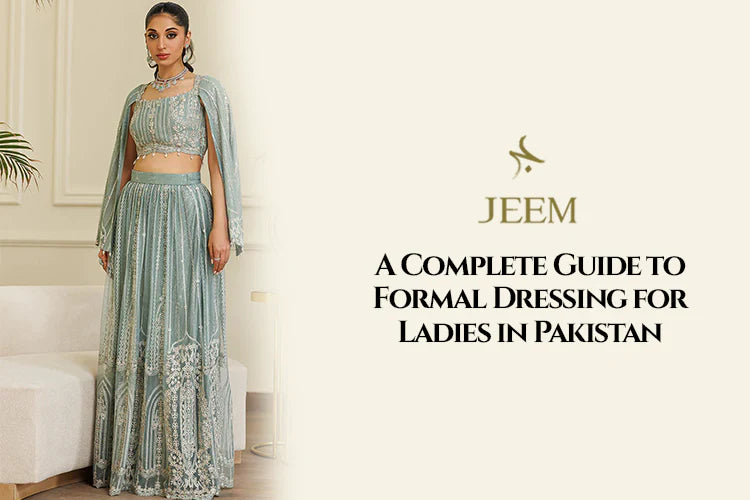
A Complete Guide to Formal Dressing for Ladies in Pakistan
Formal dressing for ladies in Pakistan depends on the occasion. For a shaadi or dawat, outfits with embroidery, rich fabrics and detailed designs are common choices. You might wear a long shirt with trousers, an anarkali, a gharara or a lehenga. These outfits work well for celebrations but may look too dressy for an office or business meeting. Office wear is usually simpler, with clean cuts, minimal embroidery and little to no shine.
The right outfit also depends on the type of event. This guide covers formal wear for weddings, family gatherings and the workplace. You'll learn about popular styles, suitable fabrics, wedding dress codes and embroidery techniques such as zardozi and dabka, along with practical tips for choosing and caring for your outfits.
What Formal Dressing Means in Pakistan
Men get black tie and business formal. Women's eastern wear never got an equivalent, so one word stretches from a bridal weight lehenga to the plain silk suit someone wears to present quarterly results. Most of the time, people mean one of these two.
Festive Formal
Festive formal is the one that comes to mind first: the outfit for weddings, Eid and family dawats. Here the fabric and handwork do the talking. You'll see raw silk, organza, jamawar and net through most of the year. Velvet takes over when December comes. Embroidery usually sits on the neckline, sleeves and hem, and it's rare to see one without a full dupatta.
Most sets are three pieces (shirt, bottom and dupatta). Heavier sets also come with a jacket, a cape or a lehenga.
Professional Formal
Work formal asks for the opposite. Interview or client meeting? Go for one solid color, very little embroidery and a straight cut that still looks sharp at five o'clock. You can't really go wrong with a long shirt over straight trousers or cigarette pants. Some women add a blazer or a koti over it.
Every office has its own unwritten rules. Multinationals and many banks are fine with Western wear, while more traditional offices expect Eastern clothing. For a corporate gala or awards night, you can go a step further with an organza dupatta or a little embellishment, as long as it doesn't start to look like mehndi wear. We've written more about office outfits in our guide to formal wear for working women.
How Formal Differs from Semi Formal
Semi formal is what you wear when everyday pret feels too plain, and a heavy formal feels like too much. Think of a small dinner, a daytime function or a dholki at a friend's place. A lot of what brands call luxury pret belongs here. It's often the easiest pick for girls at family functions too. These are the main differences.
| Semi formal | Formal | |
|---|---|---|
| Embroidery | Light, usually on the neckline or one border | Dense, often hand finished, across several areas |
| Fabric | Lawn, cotton silk, light chiffon | Raw silk, organza, jamawar, net, velvet |
| Dupatta | Printed or lightly worked, sometimes skipped | Embroidered, usually organza, net or chiffon |
| Best for | Small dinners, family gatherings, dholkis, daytime functions | Weddings, receptions, formal dinners |
Still unsure? Let the invitation and the type of event decide. An evening reception usually calls for heavier work, while a small family dinner can take something simpler. If you're torn, it's easier to tone down a formal outfit with a lighter dupatta than to dress up a plain one at the venue.
The Main Formal Styles for Women and Girls
Fabrics and embroidery change every season. The basic shapes don't, and they work for women and younger girls alike, though each one suits some events better than others.
Shalwar Kameez and Long Shirts with Trousers
The shalwar kameez is still where most formal wardrobes start. Formal shirts are usually long and cut straight or A line. Bottoms have changed a lot, and you'll now see cigarette pants, straight trousers, culottes and fitted shalwars as often as the classic shalwar.
The cut alone doesn't make it formal. A raw silk shirt with an embroidered neckline and an organza dupatta is formal. The same shape in printed lawn is something you'd wear to run errands. That's exactly why we think one good long shirt set belongs in every wardrobe.
Anarkali, Pishwas and Kalidar
All three are flared and reach the floor. An anarkali is fitted through the bodice and flares from a high waist. A pishwas has a similar line but a longer, fuller flare. A kalidar gets its flare from separate panels called kalis, and it moves a lot when you walk.
They're a good fit for walimas, receptions and evening dawats. The flare falls away from the waist and hips, so they're comfortable if you don't like fitted clothes.

Gharara, Sharara and Lehenga
These get confused a lot. A gharara is close fitting down to the knee and flares from there, usually with a band of gota or lace where the two parts meet. A sharara flares from the waist, so it's wider all the way down. A farshi shalwar is longer again and trails on the floor. A lehenga is a full skirt worn with a choli or a short shirt.
Ghararas and shararas turn up at almost every mehndi and baraat, usually with a short or medium shirt. A lehenga is the dressiest of the lot. If you're family of the bride or groom, one in a deep color is a safe bet.

Maxis, Gowns, Kaftans and Sarees
At an evening reception or dinner, a maxi or gown in organza or chiffon moves nicely and looks right. Kaftans are the comfortable choice. They're loose enough to sit in for hours, and with decent embellishment nobody will mistake one for loungewear. We like them for Eid and dinners at home.
Sarees have their fans, mostly at receptions and formal dinners. Not used to wearing one? Do a trial run at home, and include sitting down and walking up stairs.

What to Wear to Each Occasion
A Pakistani wedding isn't one event. It's a run of functions over several days, each with its own unwritten dress code, so here's the short version first.
| Occasion | What works | Usual colors | How heavy |
|---|---|---|---|
| Nikkah and engagement | Long shirt with trousers, anarkali | Pastels, ivory, soft gold | Medium |
| Mayun and mehndi | Gharara, sharara, short shirt sets | Yellows, greens, oranges, bright pinks | Medium, playful |
| Baraat | Lehenga, gharara, heavy anarkali | Deep jewel tones, with red usually left to the bride | Heaviest |
| Walima | Maxi, gown, kalidar, lehenga | Pastels, silver, champagne, soft blues | Heavy but softer |
| Eid and dawats | Long shirt sets, kaftans | Most colors, often lighter shades | Light to medium |
Nikkah, Engagement and Mehndi
Nikkahs are often in the daytime, sometimes at home, and guests usually keep things soft. A raw silk or organza long shirt and a light dupatta will do for most. Engagements are similar.
Mehndi is the one night you can go loud. Bright colors, a gharara, mirror work or gota all fit right in. Expect to sit cross legged on the floor or get pulled into a dance, and dress for that.
Baraat and Walima
The baraat is the big night and the most formal function of the wedding. Guests generally leave deep red and maroon for the bride and go for emerald, plum or navy. Save your heaviest piece for this.
Walimas tend to be lighter and a little more polished. Pastels, silver and soft blue are common, and maxis and kalidars suit the mood.
Eid, Dawats and Evening Events
Eid and family dawats sit somewhere between festive and comfortable. You'll probably visit a few homes in one day, so a long shirt set or a kaftan with moderate work is usually enough.
If a day event runs straight into an evening one, start with a simple, well cut base. Change the dupatta, jewelry and shoes in between instead of the whole outfit. Our formal wear guide for every event has more ideas.
Fabrics for Formal Wear
Fabric decides two things: how the outfit falls and how much embroidery it can carry. Raw silk is stiff enough to hold a straight shirt in shape. Organza is crisp and sheer, so it shows up in dupattas, sleeves and overlays. Chiffon is the soft, floaty one. Net always needs a lining. Jamawar comes with its pattern woven in, so it needs very little embroidery on top.
Come winter, velvet and heavier silks take over. Going to a winter wedding abroad? A velvet shirt, or a warm shawl over chiffon, means you won't spend the evening with your outfit hidden under a coat. Our formal dress fabric guide goes through each fabric, and the winter fabrics guide covers the cold months.
Embroidery and Handwork Explained
Zardozi, dabka, gota. Product pages use these words with no explanation. Once you know them, you can guess how heavy a dress will feel, and you'll understand why two outfits that look the same in photos sit at very different prices.
Metal Thread Work Like Zardozi, Dabka, Kora and Tilla
Zari is the catch all name for metal thread embroidery. It's a Persian word for gold. The heaviest kind is zardozi. In its notes on zari, the Textile Research Centre in Leiden describes it as several metal threads worked together with spangles, beads and seed pearls. Traditionally, it was done on silk, velvet and satin for wedding clothes.
Dabka is metal wire wound into tight little coils. It stands up off the fabric and feels bumpy under your fingers. Kora is zari thread with a dull finish. The shiny one is called chikna. In tilla work, gold thread is laid on top of the fabric and stitched down, so the metal stays on the surface. All of this adds weight, and a fully worked zardozi shirt is heavier than it looks on the hanger.
Thread Work and Embellishments Like Resham, Gota, Sitara and Mukaish
Resham is silk thread embroidery, though the thread is sometimes only made to look like silk. It weighs less than metal work and wins on color, not shine. Look closely at a formal neckline, and you'll often spot resham and metal work side by side.
Gota starts life as a ribbon, woven with cotton or synthetic thread and coated in metal. According to India's Office of the Development Commissioner for Handicrafts, artisans cut it into shapes and stitch it down with fine thread. Sitara are small metal spangles. Mukaish is flattened metal wire, stitched on in tiny dots so the fabric looks lightly sprinkled with shine.

How to Tell Hand Embroidery from Machine Work
None of these signs is proof on its own, but together they're good clues. Turn the fabric over first. Hand embroiderers usually tuck their thread ends away on the back. Machine work often has a stiff backing, and you may see threads running from one motif to the next. On the front, machine motifs repeat with exact spacing and identical stitches. Hand work has small differences between them, and to us that's a big part of its appeal.
| Technique | What it is | How it looks |
|---|---|---|
| Zardozi | Heavy work in metal threads, spangles, beads and pearls | Rich, raised, very formal |
| Dabka | Coiled metal wire | Textured and raised |
| Tilla | Gold thread laid on top and stitched down | Smooth, shiny lines |
| Resham | Silk or silk look thread | Soft and colorful |
| Gota | Metal coated ribbon stitched on | Bright borders and shapes |
| Sitara | Small metal spangles | Scattered sparkle |
| Mukaish | Flattened metal wire in dots | Fine, speckled shine |
Choosing Colors for Formal Events
Under evening lights, jewel tones like emerald, sapphire and wine look deep and rich. Pastels suit daytime events and nikkahs. We'd suggest looking at a pastel outfit in ordinary indoor light before you commit, since it can look paler at home than it did on screen.
Our post on formal dress color combinations has pairing ideas. If you prefer muted shades, have a look at our zinc color dress combinations.
Finding the Right Fit
Fit makes or breaks a formal outfit, whatever it costs. Work out your shape first and choose the silhouette after.
| Body shape | Styles that tend to flatter | Worth trying |
|---|---|---|
| Hourglass | Fitted bodice with a defined waist | Anarkali, fitted long shirt |
| Pear | Volume below the hip, detail near the face | A line shirts, sharara |
| Apple | Empire or high waistlines, flowing shapes | Kaftan, pishwas |
| Rectangle | Shapes that create a waist | Peplum style shirts, kalidar |
Floor length kalidars and long jackets suit taller women well. For petite women, knee length or slightly longer shirts paired with straight trousers can create a balanced look. Plus size women can try structured fabrics such as raw silk, which hold their shape well. The right cut, lining and fit matter just as much as the fabric.
Ask about lining before you buy. Organza and net are sheer, and if you'd like the sleeves or back covered, a lined shirt or an inner slip sorts it out.
Ready to Wear or Unstitched?
A ready to wear outfit turns up stitched and finished. You could wear it that same evening. An unstitched suit is fabric plus embroidered panels, and your tailor does the rest. The fit is more yours that way, but it's slower, and the stitching costs extra.
At JEEM, our formal dresses come stitched in S, M and L, and some pieces come with or without lining. Regular prices sit between roughly Rs 40,000 and Rs 140,000 (checked 22 October 2026). Orders within Pakistan normally arrive in 3 to 4 working days, while international ones take around 15 to 20 days. Living abroad? Order early. Comparing labels? Our guide to clothing brands in Pakistan covers the wider market.
Dupatta, Jewelry, Shoes and Hair
A dupatta can change the whole look. Over both shoulders, it looks traditional. Pin it on one side, and it looks neater, plus your hands stay free. A jacket, cape or koti changes the look in a similar way without touching the outfit underneath.

Let the neckline decide your jewelry. With heavy work around the neck, earrings are plenty. With a plain one, go ahead and wear a statement necklace. For long events, think about your feet. Three hours in stilettos is hard going, and khussas or block heels make it far easier. Busy outfit? Keep hair simple and save the big updo for a plainer dress.
Caring for Embroidered Formal Wear
Embroidered formals don't like rough handling. Our product pages say to dry clean, dry out of direct sunlight and iron at a moderate setting. We go one step further and press from the back, with a cotton cloth on top, so the embroidery never meets the iron directly.
Storage is where a lot of good outfits get ruined. The Canadian Conservation Institute recommends as few folds as possible, padding the folds you do need with acid free tissue or clean cotton and refolding now and then so creases don't set in. Keep outfits covered, away from light and never squashed under heavier pieces. Metal thread tarnishes over time too, which is partly why we put perfume on before dressing and keep it off the embroidery.
Summary
- Formal here means either festive wear for weddings and dawats or a quieter look for work.
- Semi formal is the in between, with lighter fabric and less embroidery.
- Own a long shirt set, an anarkali or kalidar, a gharara or lehenga and a maxi or kaftan, and you're covered for most events.
- Keep your heaviest outfit for the baraat.
- Check fit and lining before you buy. At home, fold embroidered pieces as little as you can.
Frequently Asked Questions
Is shalwar kameez a formal dress?
Yes, when the fabric and the work are formal. Look at the dupatta if you're unsure. An embroidered organza, net or chiffon dupatta normally means the suit is formal. A printed one usually means it's daywear.
What should I wear if an invitation says formal?
For a family event, assume festive formal and go for an embroidered three piece. For a company dinner or awards night, a solid colored long shirt with trousers and a lightly worked organza dupatta is the safer read.
What is simple formal wear for ladies?
Think a raw silk or cotton silk long shirt, straight trousers and a light organza dupatta. Embroidery around the neckline only, and small jewelry.
Can one formal outfit work for several events?
It can, as long as the base is neutral. Wear it to the mehndi with a bright dupatta, then to the walima with a silver one and heels. Hardly anyone will notice it's the same shirt.
What should girls wear to a formal event?
For younger girls, lighter fabrics and softer colors usually work best, with a shorter shirt over a gharara or flared pants. Our top picks of formal dresses for girls have some ideas.